


Farm to Table at Mount Cinnamon
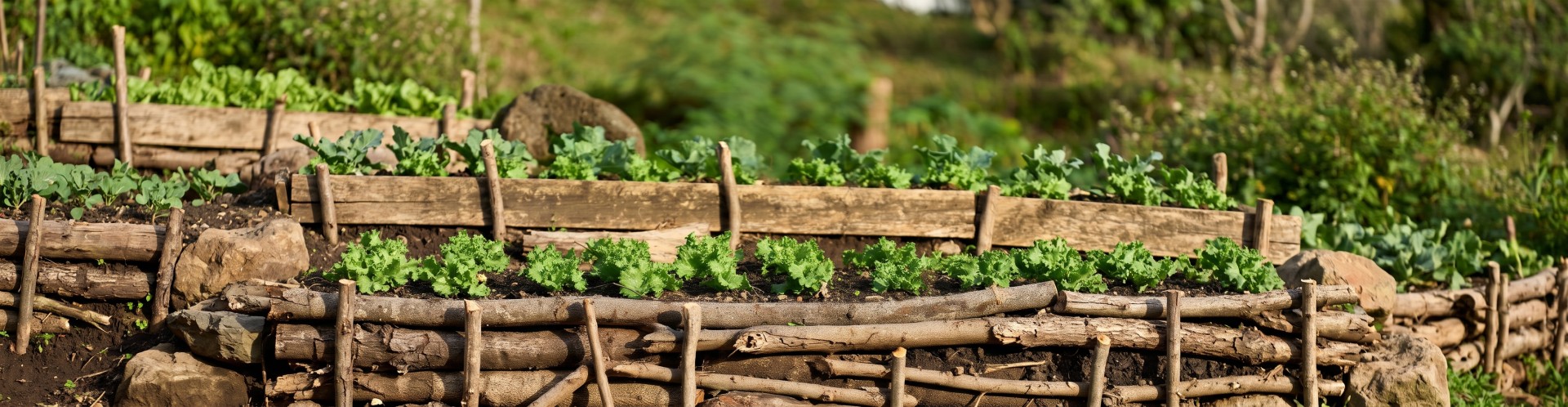
At Mount Cinnamon, “farm to table” describes an actual loop on the property: produce grown in the resort’s own garden goes into the kitchen, kitchen waste is composted and returned to the garden, and ingredients the garden cannot supply are sourced locally in Grenada.
Where Our Food Actually Comes From
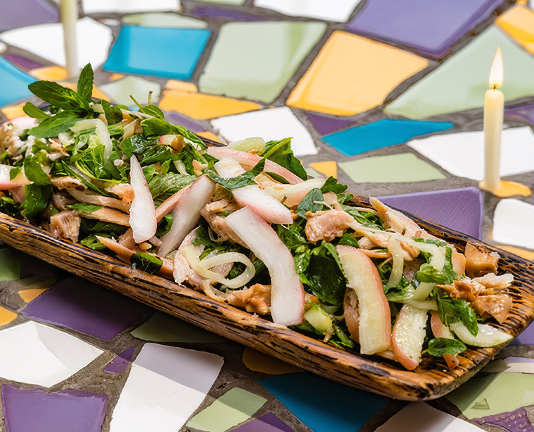
At Mount Cinnamon, “farm to table” describes an actual loop on the property: produce grown in the resort’s own garden goes into the kitchen, kitchen waste is composted and returned to the garden, and ingredients the garden cannot supply are sourced locally in Grenada. Guests can see the process firsthand through a garden tour and cooking demonstration using ingredients from the garden.
Most places that use the phrase “farm to table” mean it loosely. At Mount Cinnamon, it is something guests can actually walk through.
The loop, start to finish
It starts in the garden.
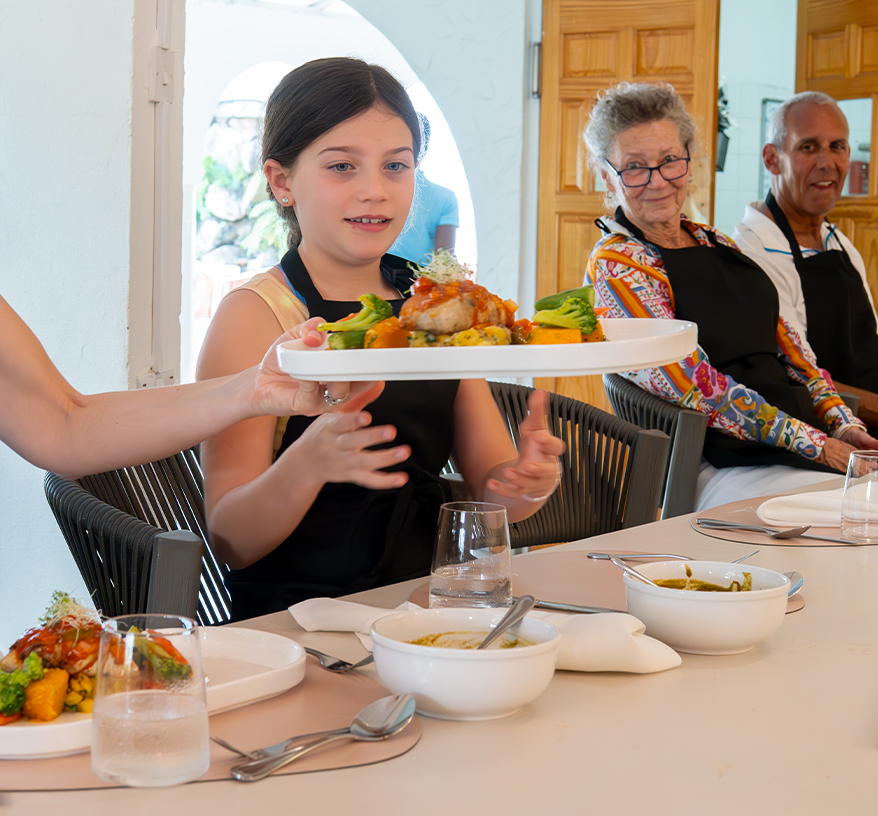
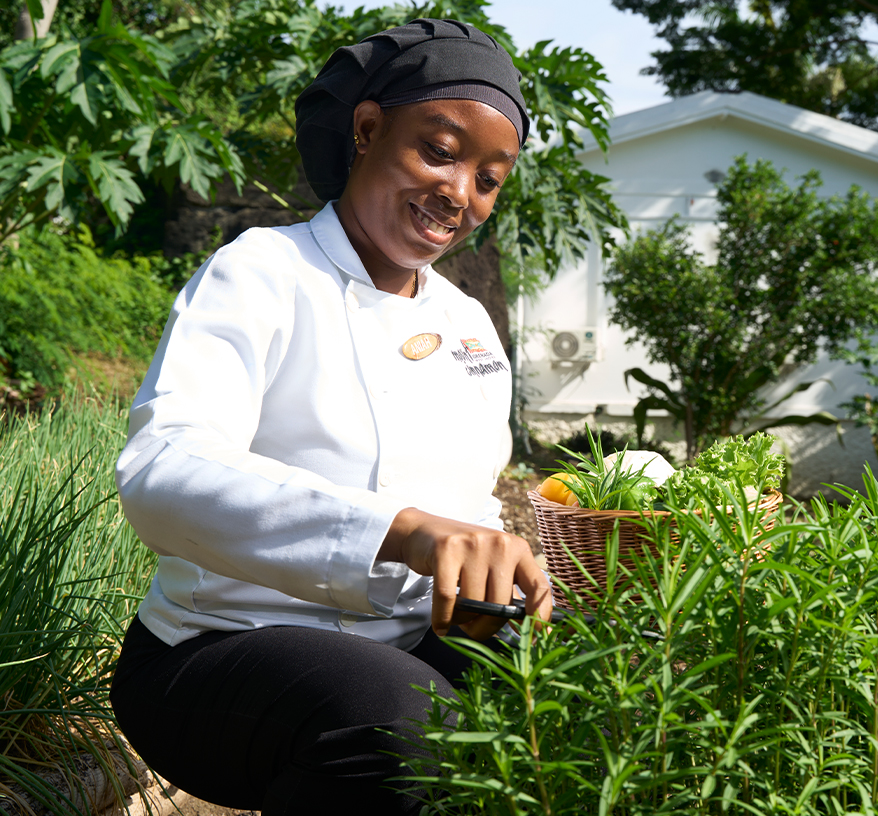
Mount Cinnamon’s garden and mini farm produce a variety of fresh herbs, fruits and vegetables for the kitchen. What is grown on the property is harvested and used in the food served to our guests, creating a direct connection between what is planted, what is prepared and what eventually reaches the table.
But the commitment to local sourcing does not stop at the garden gate.
For ingredients the resort cannot grow or obtain itself, the kitchen sources locally within Grenada wherever possible. Fresh fish comes from local fishermen, while the menus change according to seasonality and availability.
And then it comes back around.
Kitchen waste is composted and returned to the garden, feeding the soil that grows the next round of produce. What begins in the garden makes its way to the kitchen and table, before part of it returns to the garden again.
It is a small-scale, working loop — not simply a phrase on a menu.
See it, then taste it
The best part is that guests do not have to take our word for it.
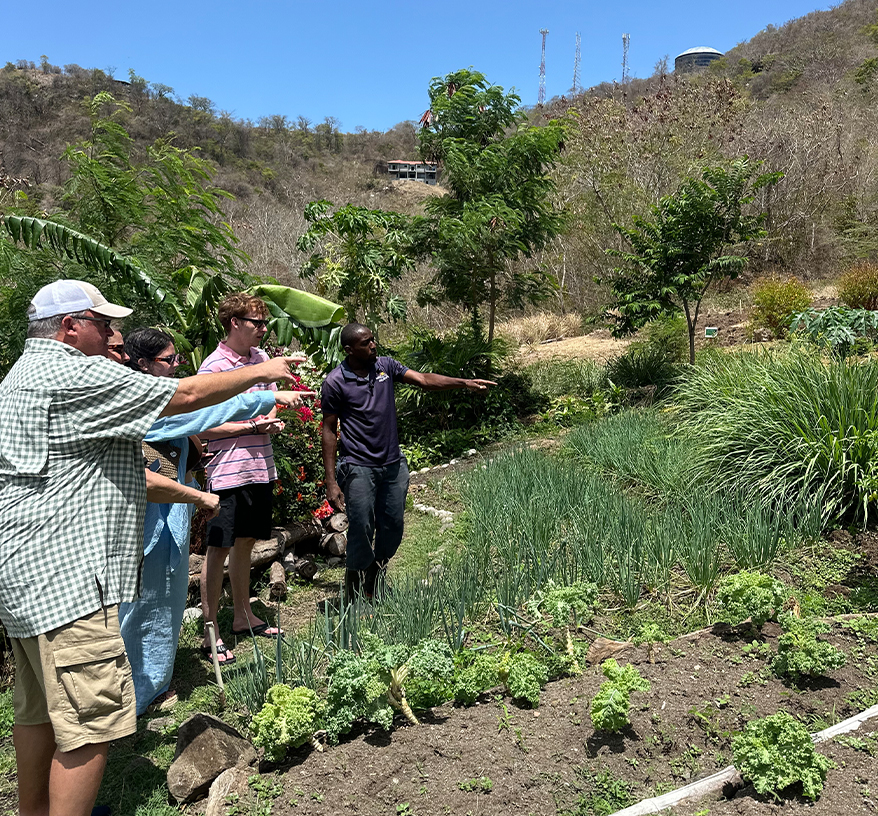
Guests can join a garden tour and see what is growing, learn about the ingredients being used by the kitchen and get a closer look at where some of the flavours on their plate begin.
The experience can then continue with a cooking demonstration, where the chef uses ingredients from the garden to show how they are transformed in the kitchen.
You see it growing. You learn where it comes from. Then you watch it become part of a dish.
It turns “farm to table” from something happening behind the scenes into something guests can actually experience.
Why it matters
There is a practical reason for working this way.
Growing what we can on property means fresh produce can move directly from the garden into the kitchen. Sourcing other ingredients locally keeps the connection with Grenada going beyond what Mount Cinnamon can grow itself.
It also means the food can respond to the seasons. Menus are shaped by what is available, allowing the kitchen to work with ingredients when they are at their best rather than treating the menu as something completely separate from its surroundings.
And because kitchen waste is composted back into the garden, the process does not simply end when the meal is served.
A taste of Grenada
The garden is only part of the story.
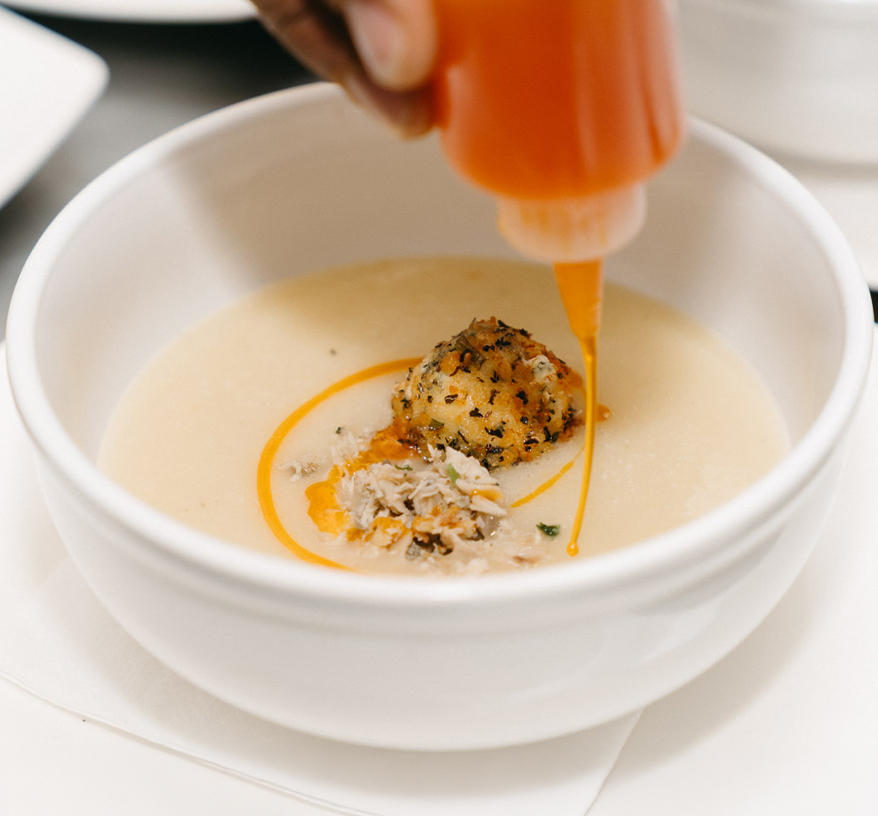
Grenada’s food culture is shaped by the island’s fertile landscape, its agricultural traditions, its fishermen and the spices for which it is known. Nutmeg, cocoa and cinnamon are part of the island’s culinary identity, while fresh local seafood and produce bring the flavours of Grenada to the table in a more immediate way.
At Mount Cinnamon, that connection comes together through the ingredients we grow, the local suppliers and fishermen we work with, and the way our chefs adapt to what is available.
The result is food that has a sense of place.
More than a meal
There is something satisfying about knowing where your food came from.
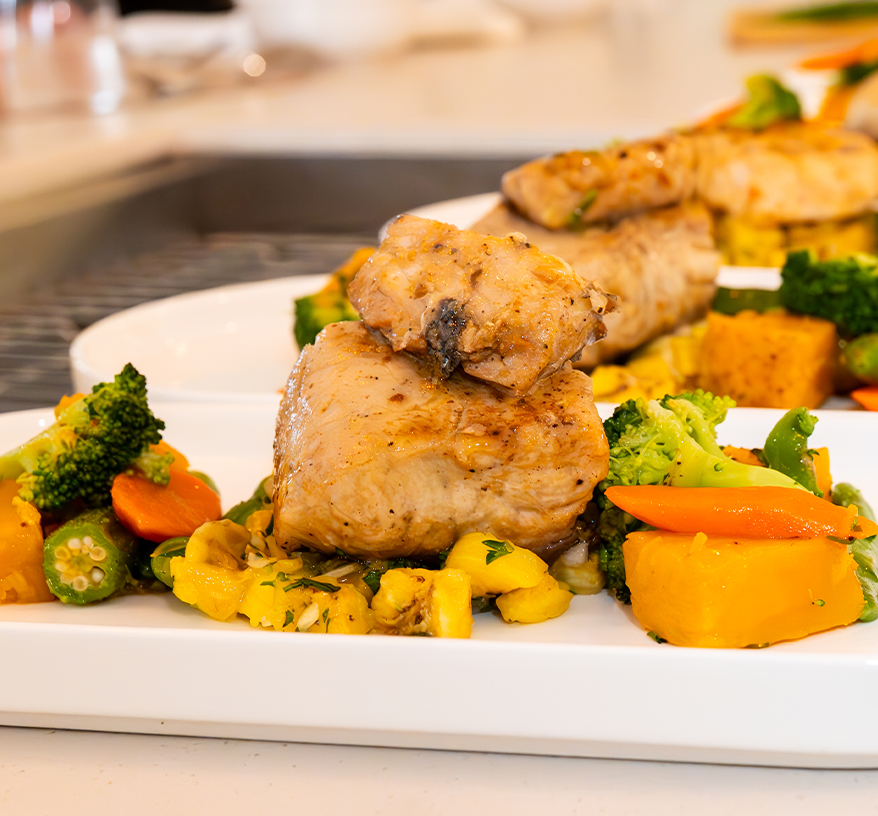
At Mount Cinnamon, that connection can begin with a walk through the garden, continue in the kitchen and end at the table. It can be as simple as recognising an herb you saw growing earlier that day, tasting a locally caught fish, or watching a chef turn garden ingredients into a dish during a cooking demonstration.
It is one of the ways we bring guests closer to Grenada — not just by showing them the island, but by letting them experience some of what it grows.
And perhaps that is what farm to table should mean: not a label, but a connection between the land, the kitchen and the people sitting around the table.
Frequently Asked Questions
What is farm-to-table dining?
Farm-to-table dining connects the food served to guests with the farms, gardens, fishermen and local producers behind it. The approach places greater emphasis on local sourcing, seasonality and understanding where ingredients come from.
Why is Grenada called the Spice Island?
Grenada earned its “Spice Island” reputation through its long history of growing spices, particularly nutmeg and mace. Cinnamon, cloves and other spices are also part of the island's agricultural and culinary traditions.
Is Grenada a good destination for a food-focused holiday?
Yes. Grenada offers opportunities to explore local produce, spices, seafood, cocoa and Caribbean cooking alongside the island's markets, restaurants and agricultural experiences.
Can you visit a garden or farm while staying at a resort in Grenada?
Some resorts offer garden or farm experiences as part of the guest experience. At Mount Cinnamon, guests can join a garden tour to see the produce grown for the kitchen, then experience those ingredients being prepared by the chef as part of a cooking demonstration.